The decisions, fixes, and execution behind the result.
Who Was the Client?
A web application suite with utility pages, calculators, converters, and tools competing for long-tail organic searches. Client details are anonymized to protect confidentiality.
What Was the Challenge?
The platform had many pages but not enough differentiation between them. Some tools lacked explanatory content, navigation paths were weak, and indexable pages did not always meet the quality threshold needed for sustainable search growth or approval under AdSense (Google's ad-placement program for publisher sites) review.
What Was the Strategy?
We reviewed index coverage, crawl paths, metadata, page templates, internal linking, content depth, navigation standards, and AdSense policy risks. The work separated pages that should be indexed from pages that needed consolidation, noindexing, or stronger supporting content.
What Were the Results?
- Tool-page template quality improved
- Thin-content and duplicate-pattern risks reduced
- Indexation priorities mapped
- AdSense compliance checklist created
- Internal links strengthened around high-demand tool clusters
Impact Metrics
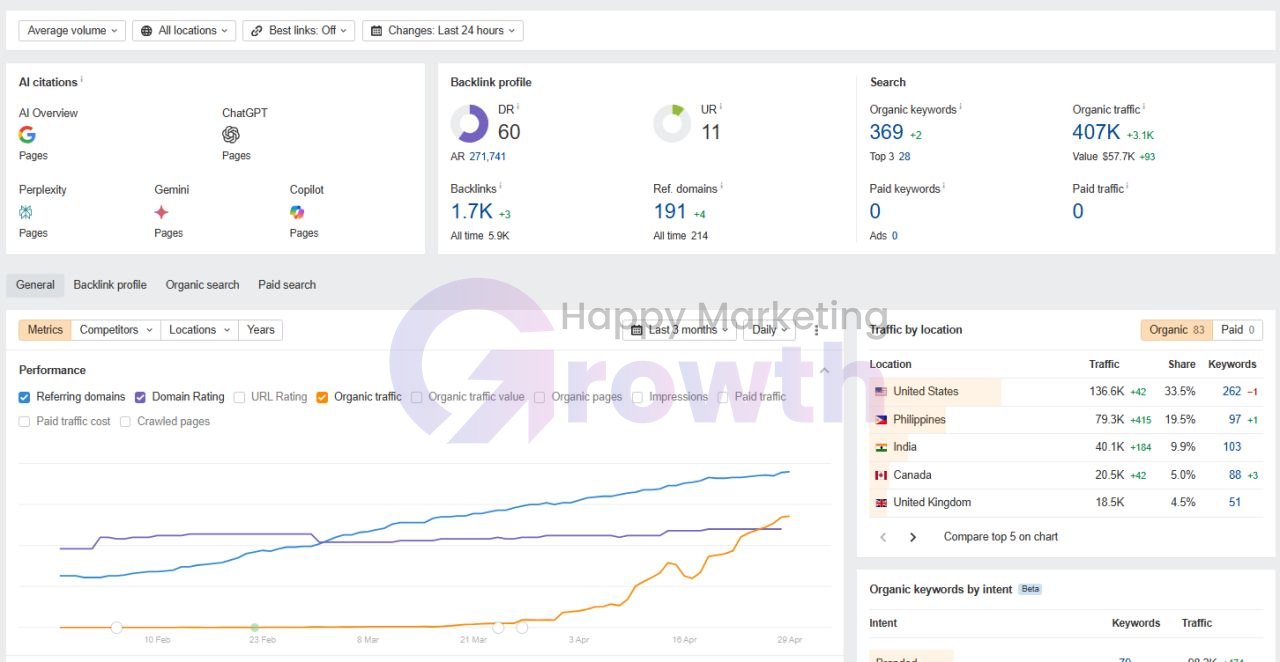
- 407,000 estimated monthly organic visits in Ahrefs
- Domain Rating 60, with 191 referring domains
- 369 ranking keywords, 28 of them in Google's top three
- Worldwide audience: 33.5% of organic traffic from the United States, 19.5% from the Philippines, and 9.9% from India
Why Did This Work?
Programmatic SEO is not just publishing lots of pages. Each page needs enough unique value, clear navigation, and a reason for search engines and ad reviewers to trust it. Tool sites also win on a small number of very high-volume searches: here, 369 keywords drive over 400,000 estimated visits a month, so getting the core tool pages right mattered more than adding more of them.
All traffic figures are Ahrefs estimates, not the site's own analytics.
For technical SEO support in priority markets, see Technical SEO Services in UAE or Technical SEO Services in Pakistan.